 Alessandro Romano · ·
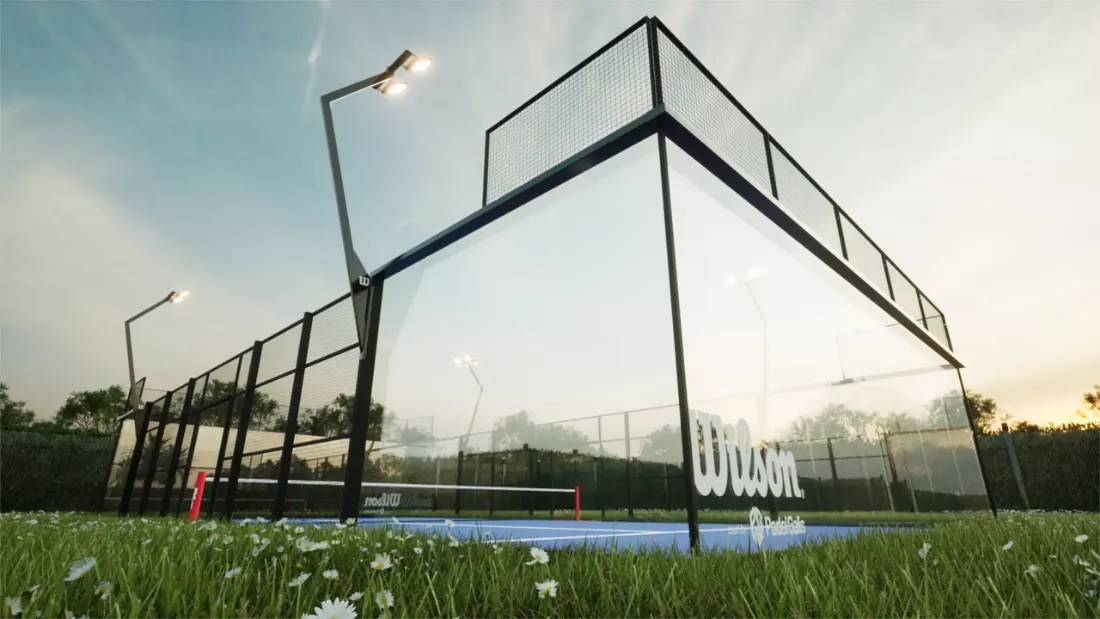
Padel is a racket sport played mostly in doubles on a 20 × 10 m court, about a third the size of a tennis court, enclosed by glass and mesh walls that are part of the game. Players use solid, stringless rackets and a ball close to a tennis ball, score like tennis, and may play the ball off the walls after it bounces. It was invented in Acapulco, Mexico, in 1969, and is now played across Europe, Latin America, the Middle East and beyond.
It borrows its scoring from tennis and its walls from squash, but it has a rhythm of its own: long rallies, lobs, smashes and a constant battle for the net. It is also one of the easiest racket sports to pick up, which explains much of its success.
A short timeline
- 1969, Acapulco, Mexico. Enrique Corcuera adapts a court at his home, building walls around it to keep the ball in play. The game he invents with his family is the ancestor of modern padel.
- 1974, Marbella, Spain. Prince Alfonso de Hohenlohe, a friend of Corcuera, builds courts at the Marbella Club. Padel becomes fashionable on the Costa del Sol.
- 1975 onwards, Argentina. Padel crosses to Argentina, where it explodes in the 1980s and 1990s with thousands of courts and a generation of top players.
- 1991. The International Padel Federation (FIP) is founded in Madrid. The first World Championships follow in 1992 in Spain.
- 2000s and 2010s. Spain becomes the sport's centre, with professional circuits drawing large crowds and television coverage.
- 2020s. Padel spreads quickly across Europe (Italy, Sweden, France, the Netherlands, the United Kingdom), the Middle East and beyond, and professional padel is reorganised around the Premier Padel tour.
- 2026. A revised FIP rulebook takes effect on 1 January, adding the Star Point, a new way to settle deuce, which the professional tours adopt this season.
How a point is played
A padel court measures 20 by 10 metres, split by a net. The basics fit in a few lines:
- The serve is underhand. The server bounces the ball behind the service line and hits it at or below waist height, diagonally into the opponents' service box. It must bounce in the box. Like tennis, you get two attempts.
- The return must let the ball bounce first. After that, players may volley or let the ball bounce.
- On your side, the ball may bounce once on the ground, and then hit the walls as many times as it likes before you return it.
- You can use your own walls: hitting the ball into your own back or side glass so that it travels over the net is allowed.
- The ball must land on the ground in the opponents' court before touching their walls. A ball that hits their glass or mesh first is out.
- Scoring follows tennis: 15, 30, 40, game, then sets of six games with a tie-break at 6–6. At deuce, the event decides: classic advantage, a single deciding Golden Point, or the Star Point, where after two advantages are lost one deciding point is played. Club matches often use the Golden Point to keep games short.
That is enough to start. Finer rules can wait until your second or third game: for example, a serve that lands in the box and then touches the metal mesh is a fault, while one that reaches the glass is still in play.
Why players fall for it
- Real rallies from the first hour. The court is small, the serve is gentle and the walls give you a second chance.
- It is social. Doubles is the norm, so every game involves four people, and padel clubs usually have a lively bar.
- It suits every age and level. Power matters less than placement and teamwork, so mixed-age and mixed-gender games work well.
- It is a good workout without being punishing. Short sprints, lots of movement and no long runs to the back of a tennis court.
What you need for your first game
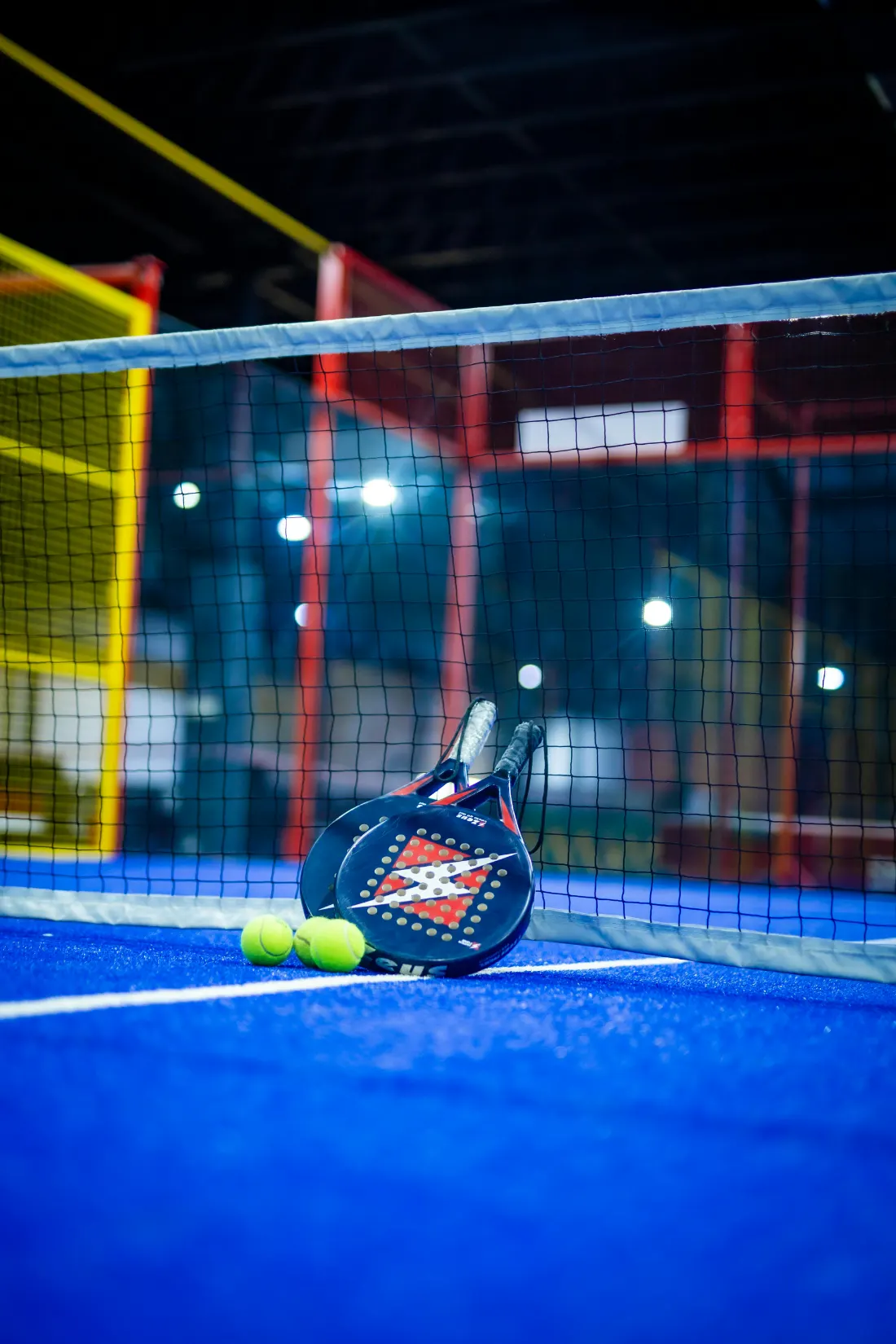
- A padel racket. Beginners should choose a round-shaped racket with a soft core, which is forgiving and easy to control. Most clubs rent rackets for your first sessions.
- Padel balls. They look like tennis balls but are slightly smaller and less lively (why they differ).
- Shoes for the surface. Most courts are artificial grass with sand; shoes with a herringbone or omni sole give grip. Running shoes slip.
- Three other players. If you do not have them, join an open match at a club, where you are matched with players of your level.
Ten tips for beginners
- Hold the racket with a continental grip (as if shaking hands with the racket's edge). It works for almost every shot.
- Keep your swing short. Padel rewards compact, controlled strokes, not big tennis swings.
- Let the ball come off the back glass. Step aside, wait for it to come off the wall, then play it. Rushing is the most common beginner mistake.
- Get to the net with your partner. The team at the net controls the point. Move up together and stay side by side.
- Lob to win the net back. When your opponents are at the net, a high, deep lob over them pushes them back.
- Aim for the middle. A ball between two opponents often causes hesitation.
- Talk to your partner. "Mine", "yours", "stay", "go": simple calls avoid collisions and missed balls.
- Do not overhit smashes. A controlled overhead into the corner wins more points than a big smash that comes back off the glass.
- Play with people slightly better than you. You will learn faster, and padel players are usually happy to help.
- Take a lesson or a clinic early. A coach will fix your positioning in an hour, before bad habits settle in.
Finding a game
The easiest way to start is to book a beginner session or join an open match at your level at a club near you. Clubs often run social formats such as Americanos, in which partners rotate every few games, which are perfect for meeting players.
Start playing with PLAI
PLAI is the free app for players and members to find a game: venues and courts near you, open games you can join alone, lessons and tournaments. Book and pay your share from your phone, chat with your group, and record ranked results so your level follows your progress. Running a venue? Pay nothing. Get everything. PLAI is 100% free to run your venue: no subscription, no contract, no limits. See PLAI Business.
FAQ
Where was padel invented?
In Acapulco, Mexico, in 1969, by Enrique Corcuera, who built walls around a court at his home.
Is padel like tennis?
It uses tennis scoring and a similar ball, but the court is smaller, the serve is underhand, the rackets have no strings, and the walls are in play.
Is padel played in singles or doubles?
Almost always doubles. A narrower 20 × 6 m single court exists but is rare.
What is the Star Point in padel?
A deuce format added to the FIP rules for 2026: after a first and a second advantage are lost, a single deciding point settles the game.
Is padel hard to learn?
No. Most beginners rally in their first session; reading the ball off the glass takes a few games.
Related reading: Padel court dimensions · Padel vs pickleball.